
January 13, 2025
Why Security Cameras Alone Are Not Enough
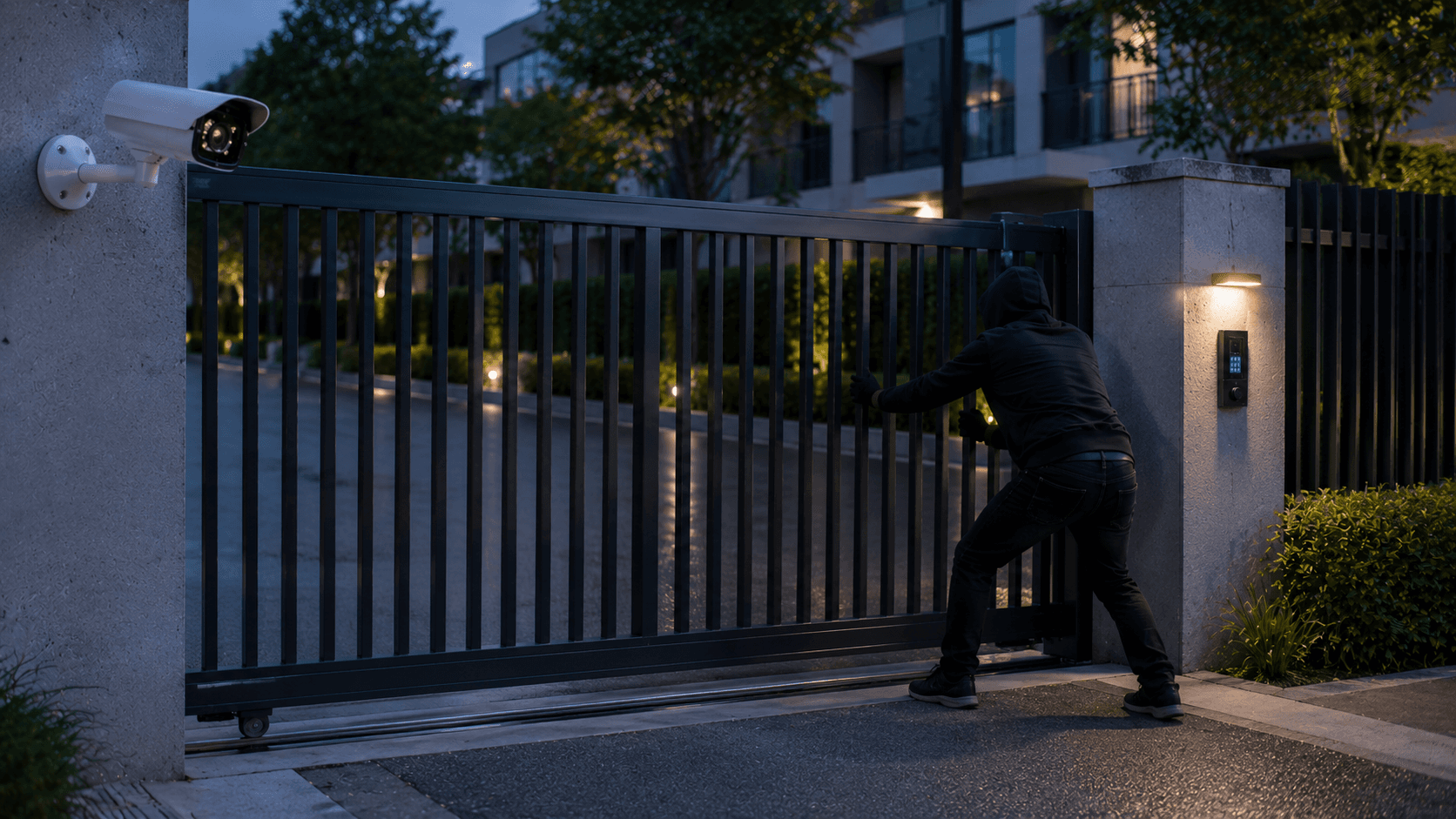
Security cameras are a valuable tool, but they need to be part of a broader security strategy that includes access control, lighting, and response plans.
Security cameras play an important role in monitoring, but relying on them by themselves leaves gaps in your protection.
A strong security strategy combines cameras with access control, alarm systems, good lighting, and a clear response plan.
Cameras are only one piece of the puzzle
A camera can record an incident, but it does not stop it from happening.
- Cameras can deter crime, but they do not physically block intruders.
- Video footage is useful for review, but it is not the same as active intervention.
- Poor placement or bad lighting can make a camera much less effective.
For most properties, cameras should support other systems rather than be the only defence.
Access control adds a proactive layer
Access control systems prevent unauthorised people from entering in the first place.
- Gate access systems stop unknown vehicles before they reach the property.
- Visitor management keeps a record of who is allowed in and when.
- Smart entry methods can be updated quickly if access rules change.
When cameras and access control work together, you get both visibility and control.
Alarms and response complete the protection
A camera may alert you to an event after it happens, but alarms and response systems act immediately.
- Alarm systems can trigger local alerts and notify security teams.
- Armed response or on-site teams can reach the scene faster.
- Integrating cameras with alarm logic helps verify incidents quickly.
This combination reduces the time between detection and action.
Lighting and design matter too
Good lighting improves camera performance and makes it harder for criminals to hide.
- Well-lit entry points are easier to monitor and safer for visitors.
- Motion-activated lights can deter intruders before they reach the gate.
- Site design should avoid hidden corners and blind spots.
A well-designed environment makes cameras more effective and improves overall security.
Use cameras for evidence and verification
Cameras are most valuable when they support investigation and confirm what happened.
- Use footage to verify alarms before sending a response team.
- Keep clear records of access events and security incidents.
- Review footage periodically to identify weaknesses in your system.
Cameras should help security staff make better decisions, not carry the entire burden.
Build a matched security system
The best security plans combine multiple layers.
- Cameras for visibility and evidence
- Access control for prevention
- Alarms and response for immediate action
- Lighting and site planning for deterrence
When these elements are matched, your property is much more secure than with cameras alone.
Security cameras are a powerful tool, but they are far more effective when they are part of a complete system. A balanced approach helps you prevent incidents, detect them quickly, and respond with confidence.