
June 07, 2024
Why Security Awareness Should Start at Home
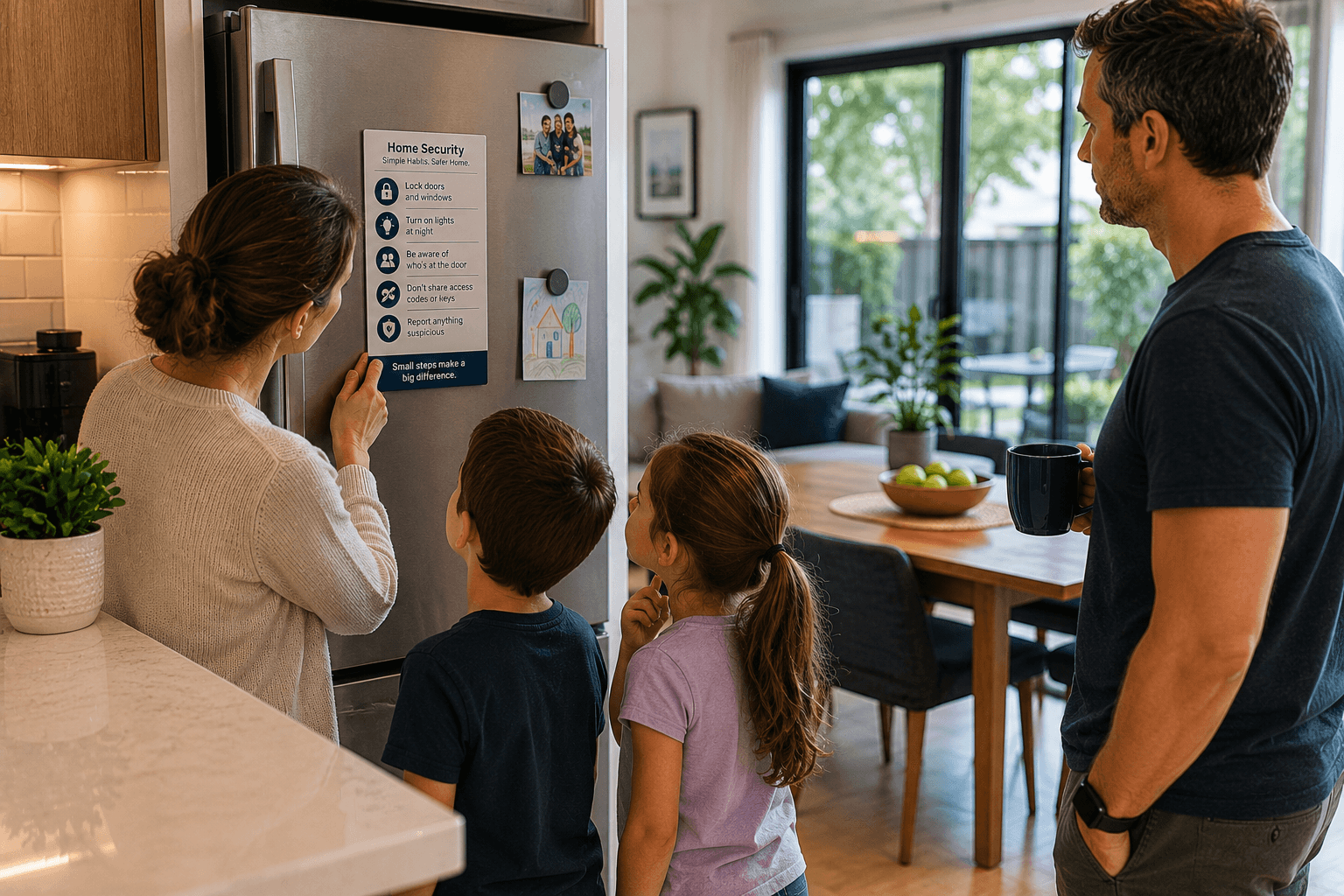
Learn why building security awareness at home strengthens communities and supports professional security teams through better habits and clearer reporting.
Security begins before a guard arrives. By June 2024, communities and households are playing a more active role in keeping properties safe, and that shift matters for everyone involved in security. When residents adopt simple awareness habits, they reduce risk, speed up incident response, and make security systems more effective.
This article explains why security awareness should start at home, practical steps households can take, and how homeowner behaviour complements professional security teams.
1. Prevention starts with everyday habits
Many security incidents begin with small oversights: doors left unlocked, gates propped open, or unfamiliar visitors allowed in without verification. Households that adopt consistent habits can prevent these openings.
- keep gates and external doors locked when not in use
- avoid sharing access codes or gate remotes unnecessarily
- report unknown vehicles or people near the property
- store keys and remotes securely, out of sight
Simple routines lower the number of preventable incidents security teams must respond to.
2. Better reporting improves response times
When residents understand what to report and how, security teams get the right information faster. Clear, timely reports let operators assess risk and dispatch help more efficiently.
Encourage residents to include:
- exact location and time of the observation
- descriptions of people or vehicles involved
- whether anyone is in immediate danger
- photos or short videos when safe to take them
High-quality reports reduce the back-and-forth and help teams act decisively.
3. Households extend the reach of monitoring systems
Cameras, sensors, and access logs are only useful if humans use them well. Residents who check resident portals, respond to verification requests, and follow notification prompts make automated systems more reliable.
By confirming deliveries, answering verification prompts, and keeping contact details up to date, households strengthen the entire security chain.
4. Reducing social engineering risk
Criminals often exploit social trust by posing as delivery drivers, contractors, or neighbours. Teaching household members to verify identities and question unexpected requests limits these attacks.
Best practices include:
- request identification for contractors and service personnel
- call known service numbers rather than using numbers supplied by an unknown visitor
- confirm scheduled visits through the property manager or resident app
These checks make social-engineering attempts far less effective.
5. Children and guests need clear guidance
Security awareness is community-wide. Households should explain simple rules to children and guests so everyone on the property follows the same safety expectations.
Useful rules to share:
- do not let anyone in without confirming with an adult
- never share PINs, codes, or remotes with visitors
- where to report suspicious activity (phone numbers, app steps)
Consistent guidance reduces accidental access and confusion during incidents.
6. Partnering with professional security teams
A collaborative approach benefits both residents and security providers. Households that follow awareness guidance enable security teams to concentrate on active threats instead of routine checks.
Security companies can support this partnership by:
- providing clear reporting channels and templates
- sharing short awareness guides and checklists
- offering regular community briefings or digital tips
When both sides play their part, response is faster and more focused.
7. Small investments, big returns
Not every improvement requires major expense. Many awareness measures are low-cost or no-cost but deliver outsized benefits:
- update contact lists and emergency numbers
- enable two-factor access where available
- regularly check gate and door hardware for faults
- store remotes and keys securely
These small steps reduce friction for security teams and reduce the frequency of incidents.
8. Building a security-aware culture
Long-term safety comes from culture, not a single rule. Community leaders and property managers should encourage shared responsibility and recognise residents who follow best practices.
A culture of awareness creates a safer environment for everyone and makes technological investments pay off faster.
Final thoughts
Security awareness at home is a force multiplier. In June 2024, estates and communities that prioritise simple habits, clear reporting, and cooperation with security teams enjoy faster responses, fewer false alarms, and stronger overall safety.
If you manage a property or live in an estate, start small: share this guidance, update access settings, and check that reporting channels are clear. Those actions make every security system work better.