
September 15, 2025
Why Criminals Target Open Pedestrian Gates
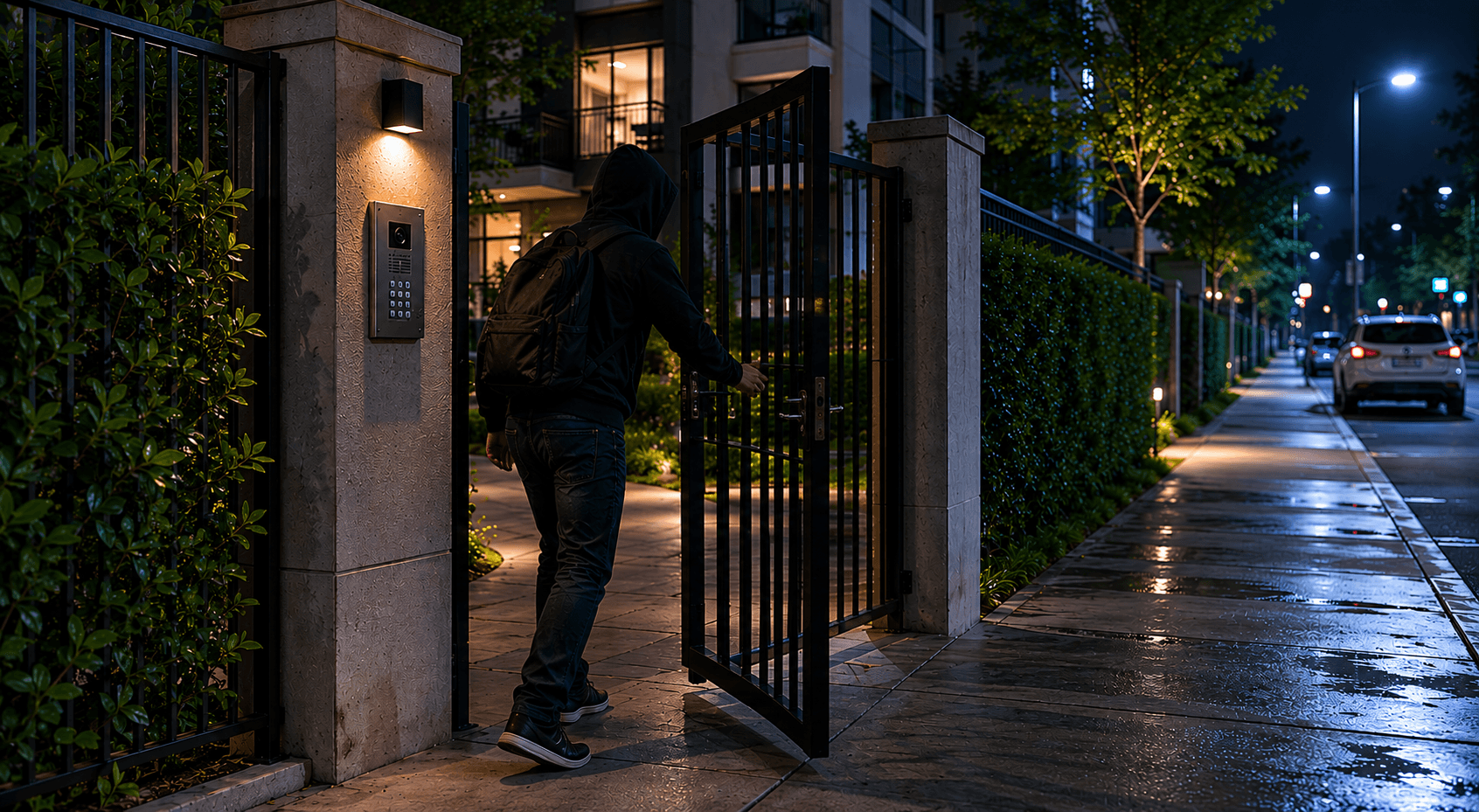
Open pedestrian gates are a common weak point in property security. Learn why criminals exploit them and how to harden pedestrian access without limiting convenience.
Pedestrian gates are often overlooked, but they can be the easiest entry point for criminals. When these gates are left open or poorly secured, intruders can bypass the main access controls and reach the property quickly.
This article explains why open pedestrian gates attract criminals and how to reduce the risk.
Easy access with low visibility
Pedestrian gates are usually smaller and less visible than vehicle entrances, which makes them an attractive target.
- Open gates are harder for guards and cameras to see from a distance.
- A person on foot can move quickly through foliage or narrow paths.
- Pedestrian routes often bypass the stronger security checks at main gates.
A secure pedestrian gate should be as controlled as the primary entrance.
Weak locking and poor maintenance invite trouble
Many pedestrian gates are fitted with simple latches or outdated locks.
- Basic locks can be broken or lifted easily.
- Rusting hinges and worn frames make gates easy to force open.
- Gates that are not checked regularly are often left unsecured.
Strong hardware and routine inspections make pedestrian access harder to exploit.
Convenience can override security
People often leave pedestrian gates open for convenience, especially during busy times.
- Residents may leave gates unlocked during the day, assuming the property is safe.
- Delivery drivers and contractors may leave a gate open after entering.
- Open gates create a habit that criminals can use to their advantage.
Clear staff and resident rules help keep pedestrian gates secure without creating unnecessary friction.
Poor lighting makes it easier to approach unseen
Dark pedestrian paths are especially vulnerable at night.
- Criminals can use shadows and landscaping to stay hidden.
- Cameras and guards need enough light to identify people clearly.
- Motion-activated lighting can deter intruders before they reach the gate.
Good lighting helps protect pedestrian routes and improves visibility for everyone.
Integrate pedestrian gates into the wider security system
A pedestrian gate should not act in isolation.
- Link gate alarms and sensors to the central security system.
- Use cameras to monitor the gate and surrounding walkway.
- Require badge or code access for pedestrian entry when appropriate.
Integration ensures pedestrian gates receive the same level of attention as vehicle gates.
Train people to treat pedestrian gates seriously
Security depends on behaviour as much as hardware.
- Educate residents, staff, and visitors about the risks of leaving gates open.
- Encourage people to report damaged or unsecured gates immediately.
- Make pedestrian gate checks part of daily security routines.
When everyone takes pedestrian access seriously, the property becomes much harder to exploit.
Open pedestrian gates are a common risk because they offer easy access, low visibility, and weak protection. By improving locks, lighting, integration, and user behaviour, property managers can keep pedestrian entry routes secure.