
December 15, 2023
The Biggest Security Mistakes Property Managers Still Make
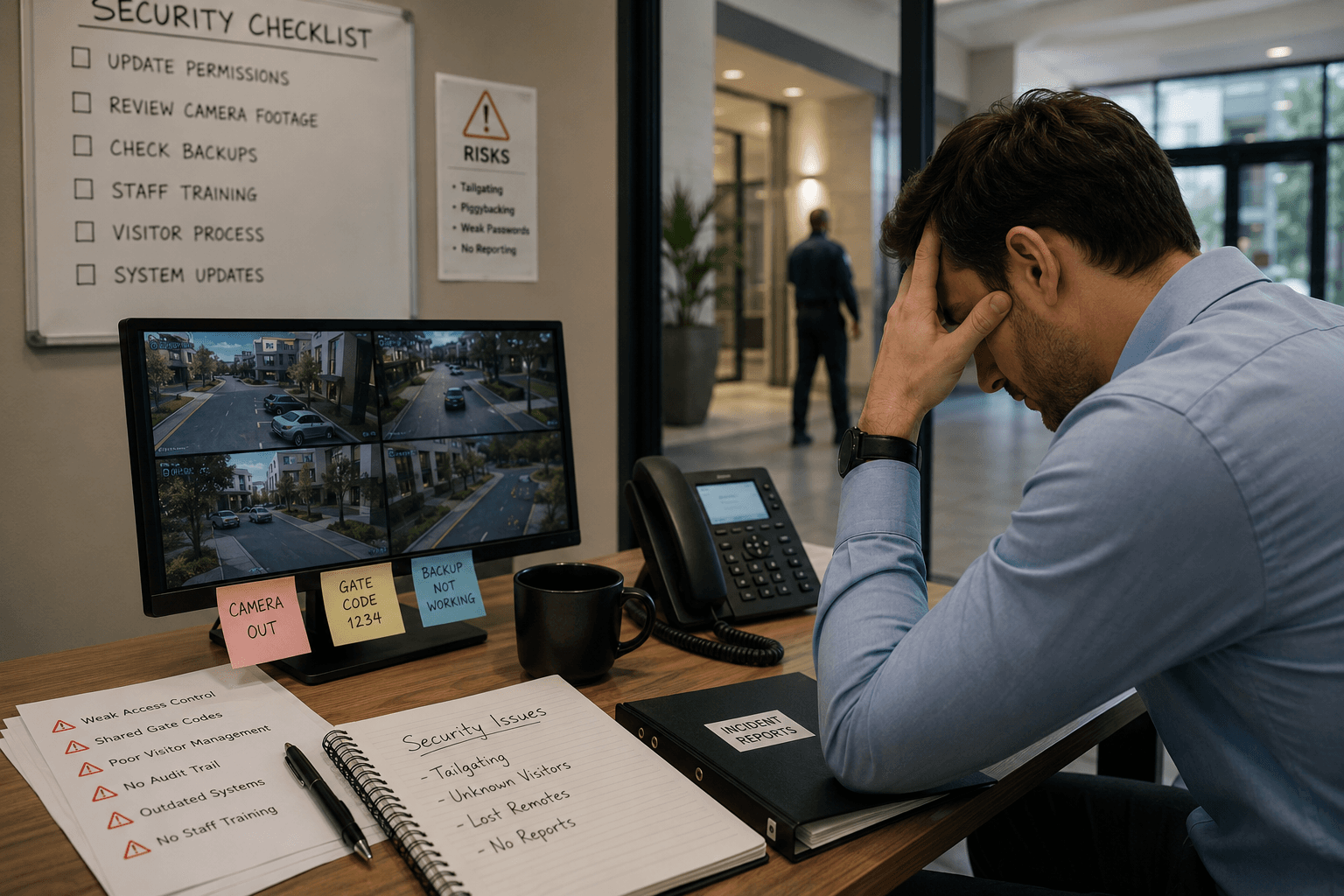
Even as estates adopt smarter systems, common management mistakes can undermine security, create operational friction, and leave properties vulnerable.
Security systems can only perform as well as the processes behind them. In many estates and complexes, the biggest risks do not come from outdated hardware alone, but from avoidable mistakes in how access and security are managed day to day.
Property managers are under pressure to balance resident expectations, cost control, visitor flow, and safety. Unfortunately, several common mistakes still weaken security even when technology has advanced.
1. Treating access control as a one-time install
A gate, intercom, or access app is not a set-it-and-forget-it solution. Security systems need regular reviews, user updates, and ongoing maintenance to stay effective.
When permissions are not reviewed, old users remain active, visitor arrangements are not cleaned up, and systems lose their value over time. In practice, this creates unnecessary risk and more admin later.
2. Allowing too many people to hold access authority
A secure estate depends on clear control over who can issue or change access. If too many people can grant permissions, change settings, or bypass standard procedures, accountability slips.
The best systems rely on clearly defined roles, limited administrator access, and visible audit trails so decisions can be checked and reviewed.
3. Relying on manual processes for visitor management
Manual visitor handling may seem manageable at first, but it often creates delays, confusion, and weak oversight. Deliveries, contractors, and temporary guests are easier to control when managed through a central system.
Without structured visitor management, estates can struggle with inconsistent rules, unreliable records, and poor communication between security teams and residents.
4. Neglecting system training
Many security failures are really training failures. If staff, residents, or body corporate members do not understand how the system works, they will bypass it, use it inconsistently, or miss important alerts.
Good training improves adoption, reduces mistakes, and helps security systems operate the way they were intended.
5. Focusing only on the gate and ignoring the wider environment
Security is never just about one gate or boom. Lighting, monitoring, communication, response procedures, and daily supervision all matter. A strong gate system can be undermined by weak surrounding controls.
Properties that view security as a whole-system problem are better equipped to respond quickly and reduce risk.
6. Not reviewing incident logs and audit data
Access logs and alarm activity are valuable only if they are reviewed. Some managers install smart systems but never use the data they generate.
Without regular review, issues can go unnoticed, patterns can be missed, and opportunities to improve security are lost.
7. Underestimating the cost of poor upkeep
A neglected system is often more expensive than a maintained one. Failing batteries, outdated software, faulty readers, and delayed repairs can all lead to operational disruption and security weaknesses.
Maintaining a security system is not just about avoiding breakdowns; it is about preserving reliability and trust.
What strong property management looks like
The estates that perform best are the ones that treat security as an ongoing operational discipline. That means assigning responsibility, reviewing access regularly, keeping systems current, and making sure people understand how to use them properly.
Smart technology helps, but it works best when supported by good management. Security is strongest when systems, people, and processes all work together.