
By Gatekeeper · September 23, 2026
Spring Security Audit Checklist for South African Estates
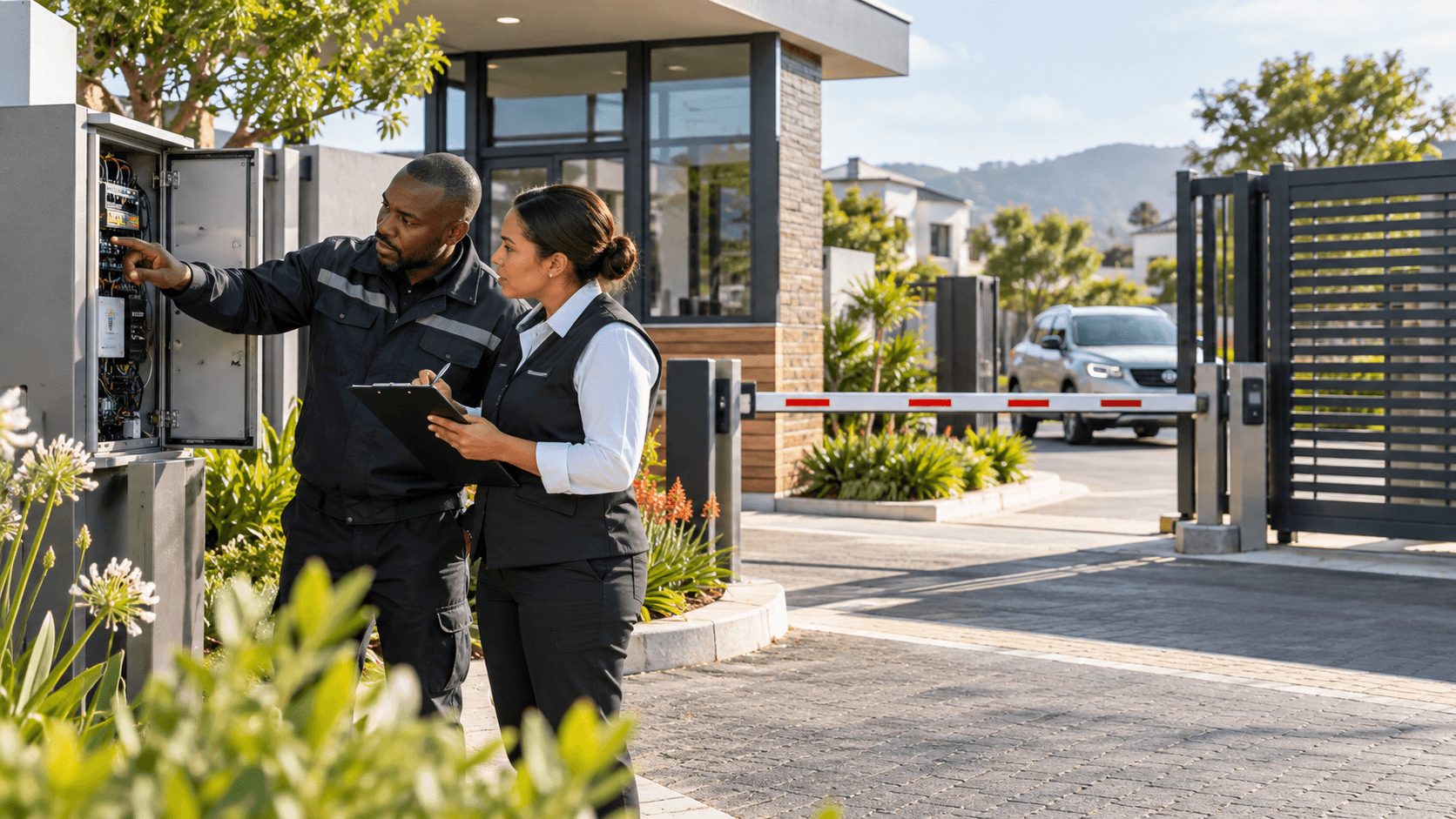
A spring security audit should test gates, review access permissions, inspect lighting and confirm emergency procedures. Use this practical checklist to identify and fix estate security gaps.
What should an estate include in a spring security audit?
A spring security audit should check the physical entrance, gate motor, backup power, access permissions, visitor procedures, lighting, cameras and emergency response plan. It should also assign each problem to a responsible person with a deadline.
Spring is a useful time for South African estates and complexes to do this work. Vegetation grows faster, daylight patterns change and the busier final months of the year are approaching. A structured review can identify small weaknesses before they become access failures or security incidents.
Why audit estate security in spring?
Security systems change over time even when the equipment stays the same. Plants can obscure cameras, former residents may remain on access lists, batteries can lose capacity and daily shortcuts can become accepted habits.
A seasonal audit gives trustees, property managers and security teams a clear moment to test the complete entry process. The goal is not simply to confirm that a gate opens. It is to confirm that the right people can enter, unauthorised access is discouraged and staff know what to do when something goes wrong.
1. Inspect every vehicle and pedestrian entrance
Start with a physical walk-through of every entrance and exit. Check the sliding or swing gate, boom, pedestrian gate, hinges, tracks, locks and closing areas.
Look for:
- gates that close too slowly or do not latch correctly;
- damaged fencing near the entrance;
- blind spots around the gatehouse;
- overgrown plants that block a camera or a guard's view;
- unsafe gaps that could allow a person to bypass the controlled entrance; and
- unclear lane markings or signs that cause drivers to hesitate.
Test each access point during both quiet and busy periods. A process that works with one vehicle may fail when residents, contractors and deliveries arrive together.
2. Test the gate motor and backup power
The gate motor, controller and power supply should be tested as one system. Confirm that the gate responds consistently, stops safely and behaves as expected after an interruption to mains power.
Ask a qualified technician to inspect batteries, wiring and surge protection where appropriate. Record the test date and any maintenance required. Do not wait for an outage to discover that the backup battery can no longer complete a normal opening and closing cycle.
If your property uses Gatekeeper, confirm that the unit and connected gate equipment are operating correctly. Customers with older mobile-network equipment should also review the Gatekeeper network upgrade information.
3. Review who still has access
An access list should reflect who needs entry now, not everyone who needed entry in the past.
Review residents, staff, domestic workers, contractors, tenants and other regular users. Remove permissions that are no longer required and correct outdated contact details. Where access is needed only at certain times, use an appropriate schedule instead of leaving permission permanently active.
Gatekeeper links access to authorised phone numbers and supports scheduled access through its management tools. This can make permissions easier to update without having to recover a physical remote. Learn more in How Does Gatekeeper Work?.
4. Check the visitor entry process
A visitor process must be secure, understandable and quick enough that people do not invent shortcuts.
Walk through the process as if you were a first-time visitor. Confirm how the resident is contacted, what the guard checks, what happens when the resident cannot be reached and how deliveries or contractors are handled. Make sure guards do not feel pressured to wave vehicles through simply because a queue is forming.
Each visitor vehicle should be treated as a separate access request. Allowing an unknown vehicle to follow an authorised car through the gate creates a tailgating risk. See the security risks of unknown vehicles tailgating for practical prevention steps.
5. Test lighting and camera visibility after dark
Inspect entrances after sunset, not only during office hours. Check whether faces, number plates and pedestrian routes are visible without glare or deep shadow.
Clean camera lenses and light fittings. Trim vegetation that blocks the field of view. Confirm that camera timestamps are correct and that recorded footage can actually be retrieved when needed.
Lighting and cameras support access control, but they do not replace it. The entrance still needs a consistent method for deciding who may enter.
6. Confirm emergency and manual procedures
Every gate team should know what to do during a power failure, motor fault, medical emergency, fire or network interruption. The procedure should protect people without leaving the property unnecessarily exposed.
Confirm:
- who may authorise manual opening;
- how residents will be informed about a fault;
- which technician or service provider should be called;
- how emergency vehicles will be admitted; and
- how the entrance will be supervised until normal control is restored.
Keep current contact details where authorised staff can reach them. Run a short scenario with the security team so the plan is practised rather than merely filed away.
7. Turn findings into an action list
An audit is useful only when findings lead to action. Record each issue, its risk level, the person responsible and the target completion date. Separate urgent faults from longer-term improvements, then check that completed work has solved the original problem.
A simple monthly review of the action list helps prevent unresolved items from carrying over into the holiday period.
Quick answers about estate security audits
How often should an estate security audit be done?
A comprehensive audit should be done at least annually, with shorter checks after equipment changes, serious incidents or repeated access problems. Gates, backup power and access permissions should be reviewed more regularly according to the site's risk and maintenance plan.
Who should take part in the audit?
The property manager or trustees, security supervisor and relevant technical service providers should take part. Resident feedback can also reveal delays or unsafe habits that formal inspections miss.
What is the most important access-control check?
Confirm that only current, authorised users have access and that expired permissions are removed. Then test whether the gate and backup systems reliably enforce those permissions.
Can an estate audit its own security?
Management can complete routine operational checks, but qualified providers should inspect technical equipment and any safety-critical faults. A specialist review is also useful when risks are unclear or recurring.
How long should a spring security audit take?
The time depends on the property's size and number of access points. A small complex may complete the initial review in a few hours, while a large estate may need several inspections, technical tests and follow-up sessions.
Make the audit part of normal estate management
The best spring security audit is practical, documented and repeated. Test the equipment, clean up permissions, observe the visitor process and give every finding an owner.
If your property needs a manageable cellular gate access system, contact Gatekeeper to discuss compatible gates, authorised phone access and scheduling.