
October 10, 2024
How Weather Conditions Can Impact Security Infrastructure
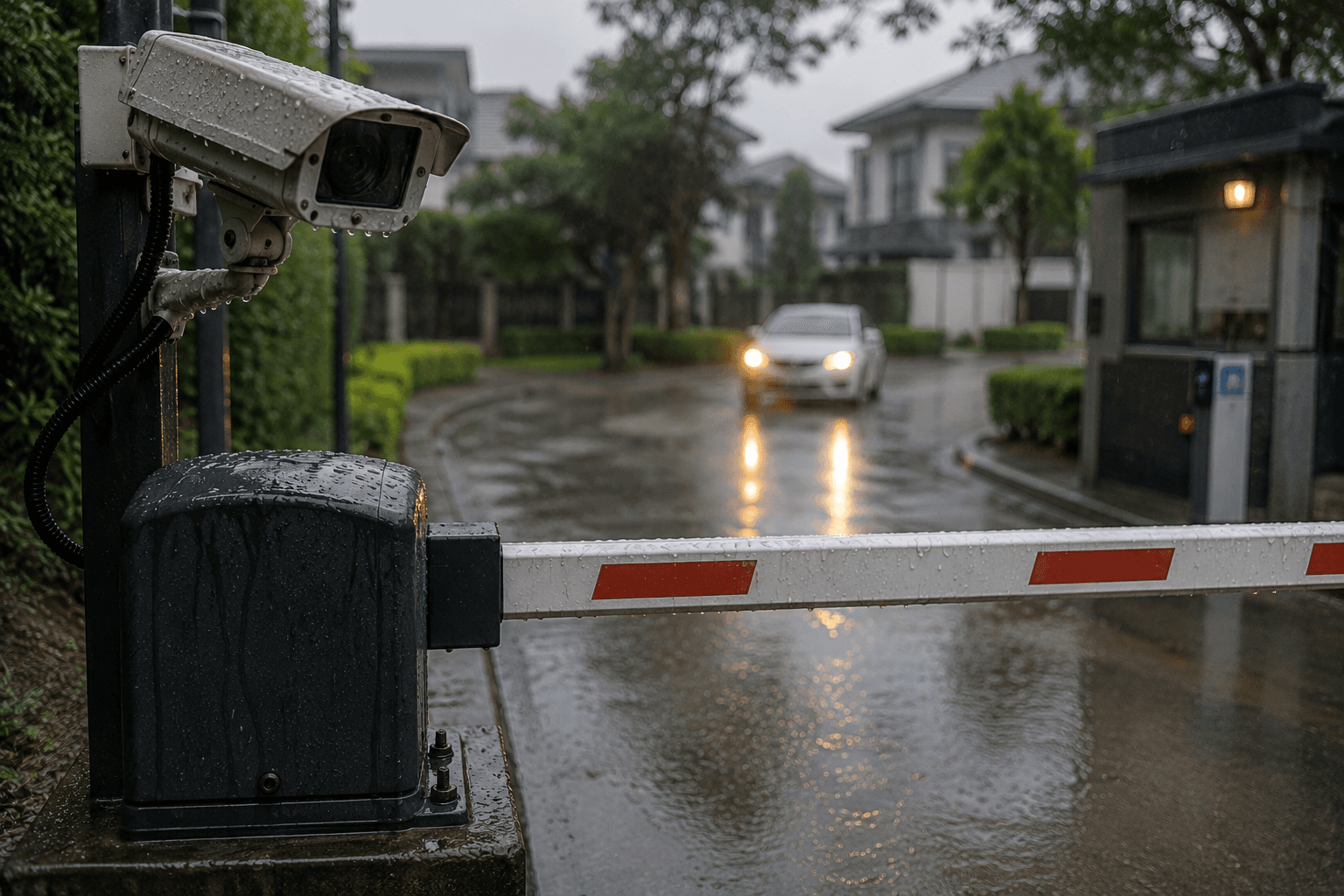
Severe and routine weather both affect gates, cameras, sensors and communications; learn how to plan, harden and respond to keep estates secure.
Weather shapes the reliability of every part of a security system. From heavy storms that flood gate motors to sunlight glare that blinds cameras, environmental conditions can degrade performance or cause outright failures. In October 2024, estate managers should plan for seasonal impacts and build resilience into their security infrastructure.
This article explains the common weather-related failure modes, practical hardening steps, and recovery strategies that keep properties safe year-round.
Physical damage and mechanical stress
High winds, falling branches, lightning strikes and flooding can physically damage gates, fences, cameras and poles. Mechanical components that are exposed to moisture or debris will wear faster and can seize or misalign.
- Inspect gate operators and hinges after storms for bent mounts or water ingress.
- Elevate and seal control boxes where flooding is a risk.
- Use corrosion-resistant hardware in coastal or humid environments.
Regular mechanical checks prevent small weather-related issues from becoming system failures.
Power outages and backup power
Storms and extreme weather often cause power interruptions. When access control and gate automation lose power, gates may become stuck, cameras go offline, and alarms cannot report events.
- Equip critical sites with UPS or battery backups for controllers and communication devices.
- Consider solar backup options for remote gates and cameras.
- Create a clear fail-open or fail-safe policy that balances safety and security during outages.
Reliable backup power keeps systems operational and reduces human intervention during weather events.
Visibility problems for cameras and sensors
Rain, fog, snow, and direct sunlight can degrade camera images and sensor performance. Reflections, water droplets on lenses, and ice accumulation reduce detection accuracy and can produce false alarms.
- Use weather-rated camera housings with hydrophobic lens coatings.
- Position cameras to avoid direct sun during peak angles and add sunshades where necessary.
- Employ thermal or radar-based sensors in climates where visible-light cameras struggle.
Choosing the right sensor technologies for local weather improves situational awareness.
Communication and network resilience
Modern security systems rely on networks to transmit events and video. Heavy rain, lightning, or physical damage to lines can disrupt cellular, fiber, or wireless links.
- Use multiple communication paths (wired + cellular failover) for critical connections.
- Harden antennas and enclosures against water ingress and wind loading.
- Monitor link performance and set alerts for packet loss or high latency.
Redundant comms reduce single points of failure and ensure events reach the control room.
Temperature extremes and electronics
Heat and cold affect battery life, electronic performance, and mechanical tolerances. Overheating causes shutdowns; extreme cold can make lubricants viscous and batteries fail.
- Choose equipment rated for the site's operating temperature range.
- Provide ventilation and heating or cooling for enclosed cabinets when needed.
- Use automotive-grade batteries or heating elements for cold climates.
Design choices matter more than ad-hoc fixes when environments are extreme.
Landscaping and drainage
Poor drainage and overgrown landscaping amplify weather risk. Water pooling around control boxes, roots lifting paving, or branches contacting fencing all create hazards.
- Maintain clear drainage away from gateways and electrical equipment.
- Trim trees and shrubs to prevent blowdown and maintain sightlines.
- Use raised mounts for sensitive devices in flood-prone areas.
A simple landscaping plan is a cost-effective risk reduction measure.
Planning for maintenance and seasonal checks
Proactive seasonal maintenance prevents weather-related downtime. Schedule checks before and after harsh seasons to catch wear and seal vulnerabilities.
- Pre-winter inspections for battery health, seals and moving parts.
- Pre-storm readiness checks for loose fittings and debris removal.
- Post-event inspections to catch damage early and prioritise repairs.
Regular schedules reduce emergency repairs and extend equipment life.
Emergency procedures and staff training
When weather causes outages or damage, clear procedures speed recovery and keep residents safe.
- Maintain a weather response checklist for gate operators and security staff.
- Train teams on manual gate operation, logging access during outages, and safe inspection practices.
- Communicate expected service impacts to residents and provide temporary access instructions.
Prepared staff and simple protocols reduce confusion and risk during weather events.
Design for resilience: redundancy and standards
Building resilient security systems means thinking in layers: multiple sensors, redundant power, and diverse communications. Use weather-rated components and follow manufacturer guidelines for IP ratings, temperature ranges, and maintenance intervals.
- Specify IP66/IP67 enclosures where water resistance is required.
- Use redundant sensors (e.g., camera + radar) for critical detection zones.
- Document vendor-recommended maintenance and replace parts on schedule.
These design choices reduce the chance of correlated failures during extreme weather.
Final thoughts
Weather will always be a factor in security system performance. By planning for physical protection, backup power, resilient communications, and seasonal maintenance, estate managers can reduce downtime and maintain protection through storms and extremes.