
February 15, 2024
How to Create a Safer Entry Process for Visitors
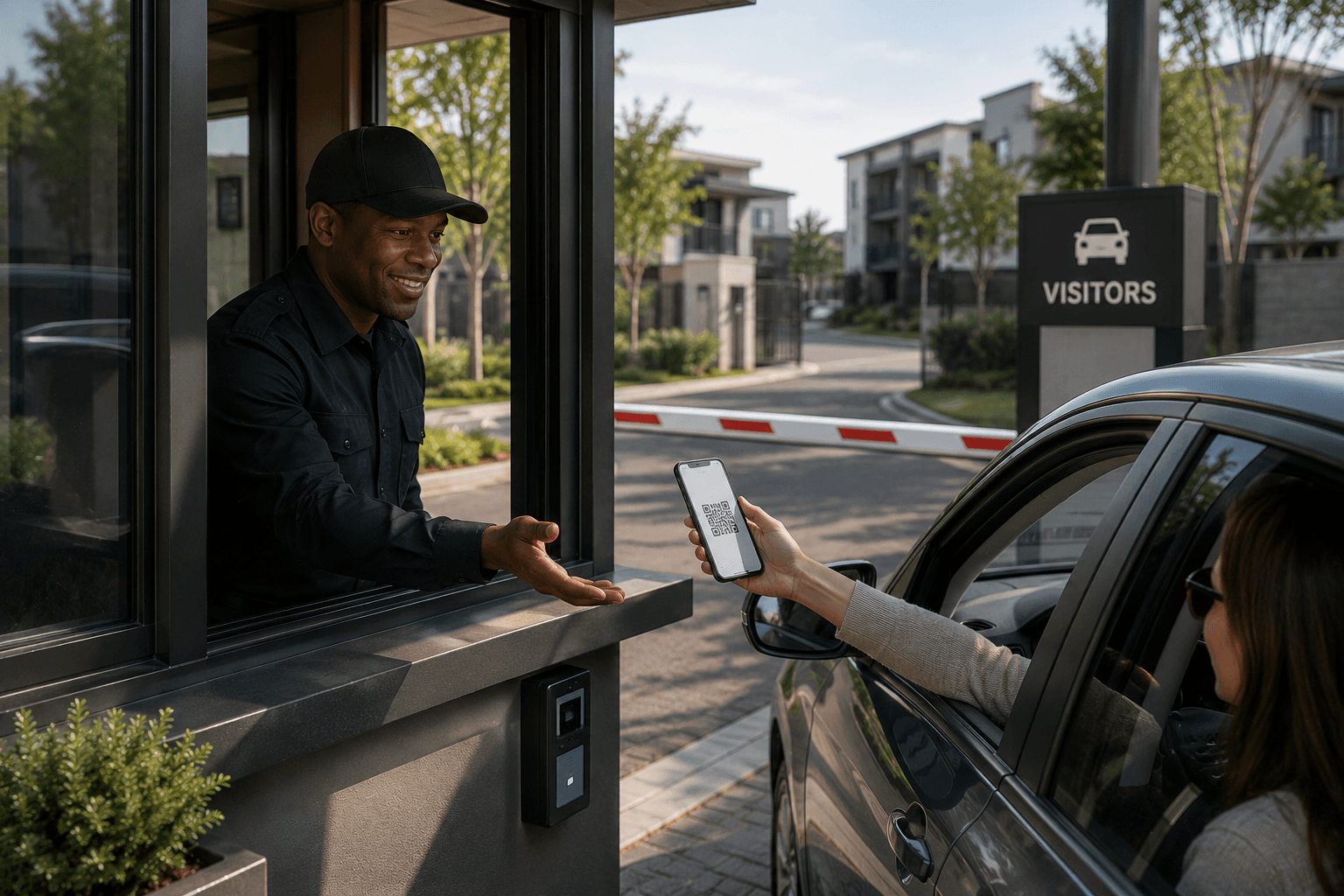
A safer visitor entry process helps estates and commercial properties control who enters, reduce confusion, and improve accountability without slowing down daily operations.
Visitor entry is one of the most important moments in any security system. It is where convenience, communication, and access control meet, and it is often where small weaknesses can create bigger risks.
For estates, complexes, and commercial properties, the goal is not only to let people in, but to do so in a way that is predictable, traceable, and easy to manage. A safer visitor process helps reduce unapproved access, improves resident confidence, and creates a cleaner experience for everyone on site.
Start with pre-registration
One of the simplest ways to improve visitor safety is to move visitor management ahead of arrival. When visitors are pre-registered, security teams and residents know who to expect, and entry can be approved in advance.
This can be done through:
- resident-approved visitor lists
- delivery scheduling tools
- contractor booking calendars
- temporary access links or codes
Pre-registration reduces last-minute confusion and gives management more control over who is allowed onto the property.
Use clear approval steps
A safer entry process should establish a clear approval flow before a visitor arrives. The property manager, security team, or resident should know who is responsible for approving access and when.
This avoids informal arrangements that rely on memory, verbal instructions, or shared devices. Clear approval steps also make it easier to train staff and ensure expectations are consistent.
Replace informal access with controlled access
Shared remotes, informal codes, and untracked handovers are some of the biggest weak points in visitor access. These methods may work in the short term, but they make it difficult to know who entered, when they entered, and whether they were supposed to.
Instead, properties should use controlled entry methods such as:
- resident-issued approvals
- temporary digital access permissions
- visitor management apps
- secure entry logs linked to each visit
This helps create accountability without making daily entry unnecessarily complicated.
Verify identity before allowing entry
Security is stronger when identity is checked at the point of entry. Visitors should be verified against the approved guest list, booking, or resident confirmation before access is granted.
This can include:
- checking a booking or pre-approved visit
- asking for identification where appropriate
- confirming the purpose of the visit
- matching the visitor to an expected time slot
Even simple verification steps make it harder for unauthorised people to slip through.
Communicate clearly with residents and staff
A secure visitor process depends on good communication. Residents need to know how visitors are managed, while security staff need clear instructions on how to handle arrivals, deliveries, and late visits.
Clear signage, simple procedures, and regular updates make the process easier to follow. When everyone understands the rules, fewer mistakes happen.
Keep a reliable audit trail
Every visitor entry should leave a record. Access logs, timestamps, approvals, and entry outcomes all matter when reviewing incidents or resolving disputes.
Audit logs also help management understand patterns, improve resource planning, and identify problem areas. A property that can track visitor movement is better positioned to respond quickly when something goes wrong.
Build in contingency plans
A stronger visitor process should also account for exceptions. Emergencies, delayed arrivals, unexpected guests, and lost credentials all need a response plan.
Having a backup process reduces confusion and helps staff act confidently under pressure. The better prepared the property is, the less likely a routine visitor interaction turns into a security issue.
Safer entry is part of a smarter security strategy
Visitor entry is often where the biggest gaps appear, but it is also one of the easiest areas to improve. By using pre-registration, controlled permissions, identity checks, and clear communication, property teams can make entry safer without making it slower.
The most effective visitor processes are those that combine strong controls with practical daily use. When safety and convenience work together, the whole property benefits.