
August 15, 2024
How Criminals Exploit Busy Entry Times
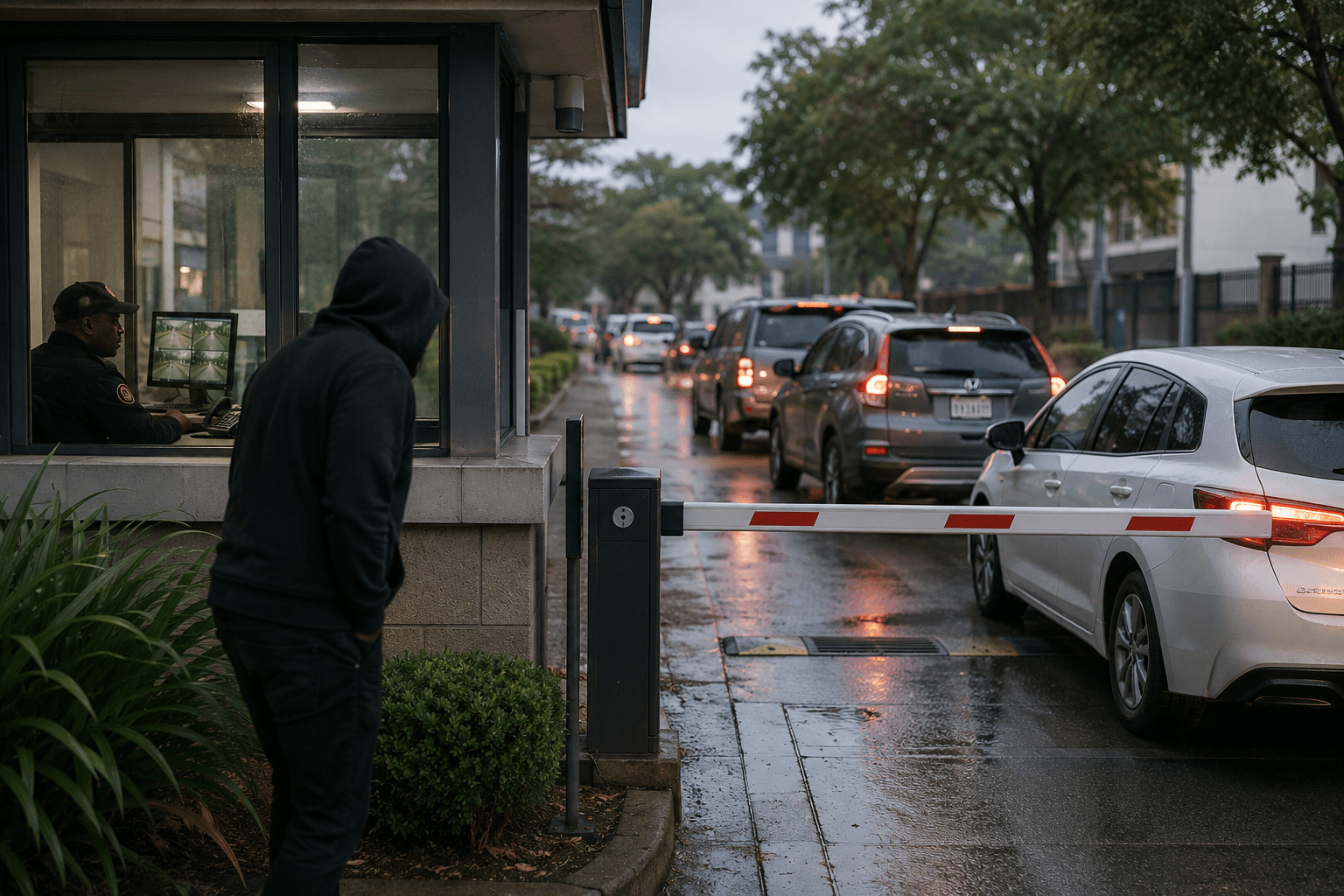
Busy entry periods create opportunities for tailgating, distraction thefts and social engineering; learn how to spot and prevent these tactics.
Busy entry times, such as shift changes, school pickups, or peak delivery windows, are predictable and exploitable. Criminals use crowds, confusion, and rushed staff to gain unauthorised access through tactics that are often low-effort but highly effective.
This article explains common exploitation methods and practical measures estates and security teams can use to reduce risk.
Common tactics used during busy entry times
- Tailgating: following an authorised person through a gate or door before it closes.
- Distraction techniques: creating a disturbance or asking for help while an accomplice slips through.
- Impersonation: posing as delivery drivers, contractors, or visitors during peak hours.
- Queue-jumping: exploiting long lines to push past gate staff or use unattended lanes.
These tactics rely on human error, short attention spans, and predictable rhythms in estate life.
Why busy times are vulnerable
High traffic increases cognitive load for gate staff and residents. When people are rushed, verification steps are skipped and exceptions become routine. Criminals study these windows and plan brief, low-risk intrusion attempts.
Practical controls to reduce exploitation
- Enforce single-file entry and anti-tailgate barriers where possible.
- Use turnstiles or staggered vehicle entry lanes to prevent follow-ins.
- Require ID or digital verification for deliveries and unfamiliar visitors.
- Position CCTV to cover queues and entry lanes, and review footage of suspicious events.
- Train gate staff to pause and verify rather than rely on assumptions.
These measures make opportunistic attempts slower and more visible.
Process and technology that help
- Pre-approval for deliveries and contractors to reduce on-the-spot decisions.
- Mobile credentials and time-limited passes to limit access windows.
- Intercom verification with photo-sharing before granting access.
- Automated gates with short-close times and sensors to detect tailgating.
Combining policy with tech reduces reliance on perfect human behaviour.
Communication and signage
Clear signage reminding residents and visitors to close gates, not hold doors, and report suspicious behaviour raises awareness. Short reminders during busy periods (e.g., via resident apps) help maintain vigilance when it matters most.
Response and recovery
- If an intrusion is suspected, secure affected areas and review access logs.
- Use camera footage and witness reports to identify time and direction of entry.
- Update access credentials and revoke any temporary passes issued around the event.
Quick, consistent follow-up reduces the chance of repeat attempts.
Final recommendations
Busy entry times will always be a target. The goal is to make exploitation visible and difficult, not impossible. Small changes, including barriers, verification steps, clearer procedures, and short staff refreshers, significantly reduce risk and keep estates safer for everyone.